

Introduction
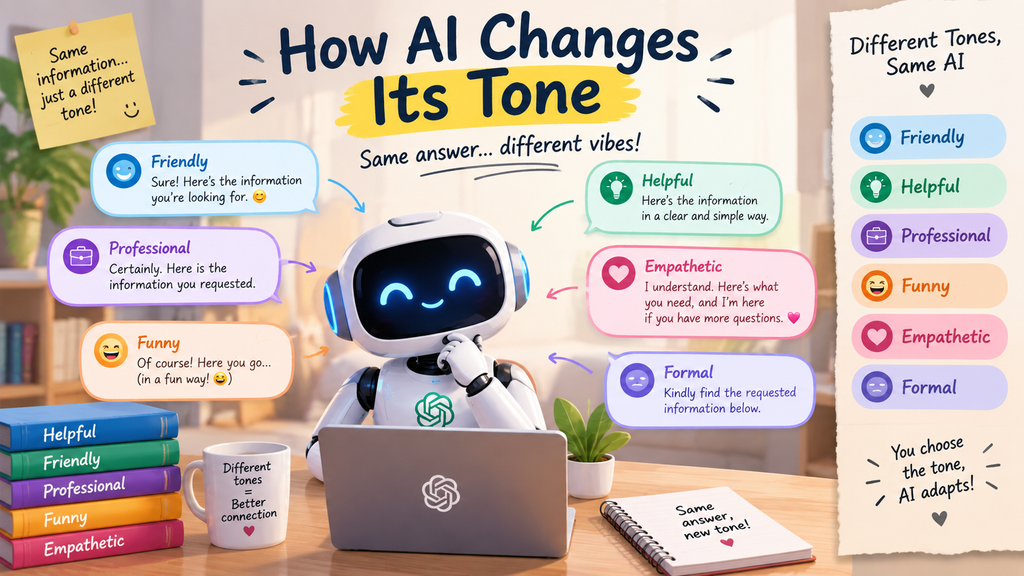
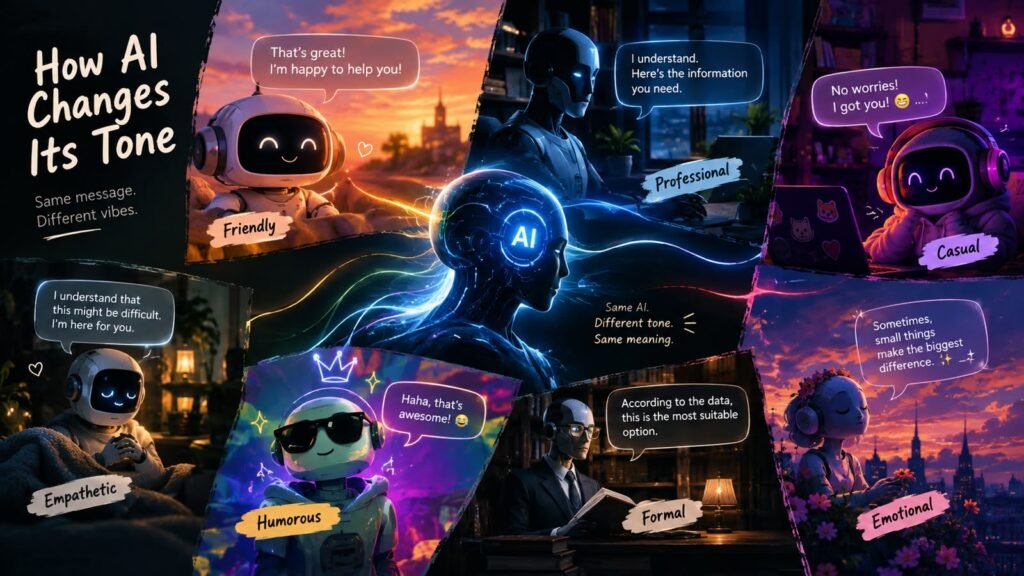
Artificial intelligence doesn’t just produce words it decides how to present them. The way an AI speaks can change from friendly and understanding to stiff and formal even in the same discussion. This doesn’t happen by chance; it is the outcome of technical systems working in combination. Learning how AI changes its way of speaking shows much about human communication as it does about artificial intelligence.
Personality Training: The Static Baseline
Every artificial intelligence has a way of speaking and that way is intentionally created. Engineers use a method called “personality training” modifications made after training that shape how an AI communicates without altering its function as a helper. Studies show that models tuned to be friendly versus unemotional behave in different ways and heres the thing: making an AI too friendly can actually lower its effectiveness. There is a balance between being liked and being effective.
In business systems this base tone is often created to match the brands voice. Engineers look at how a company talks how sentences are structured what words are used, the level of formality and train the AI to copy that. So before an AI ever answers you it already has a personality already set. That’s the starting point.
Emotional Inference: Reading the Room in Real Time
Once an AI is working it doesn’t just stay with its way of speaking. Up-to-date systems can tell how you feel and respond accordingly. This happens through emotion systems. Generative AI that guesses how you are feeling based on your words, tone or how you type.
If you seem calm the AI might respond in an steady way. If you sound excited it can match that energy with a lively tone. If you are neutral it might take on a ” advisor” style. In text chats the system notices clues in your messages and chooses words and sentence structures that fit. If it notices sadness it uses empathy and comfort instead of direct facts. The way it speaks changes from a fixed “voice” to a reaction to the current situation.
Read more:How AI Can Make Studying Easier
Prompt Engineering and Style Cards
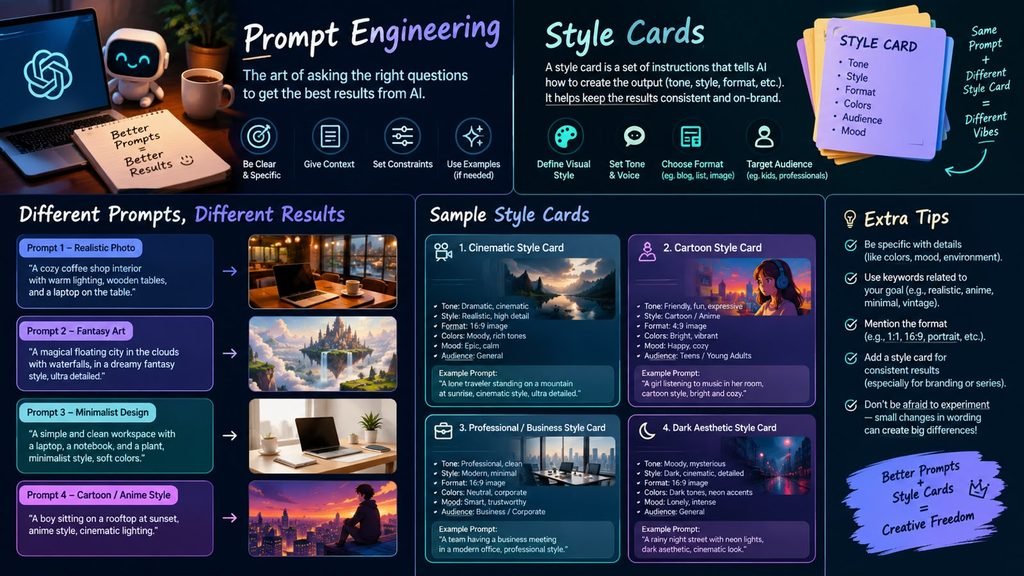
In addition to hidden detection there is a more direct way to control tone: instructions. Experts have made “style cards”short pieces of text that make the AI use ways of speaking while keeping the message the same. Four typical styles copying, lifting up changing the view and calming down
This means an AI can say the thing but present it in a completely different way. A simple request for help can become a reflective reply or a long encouraging talk. Tone becomes a dial you can adjust either as a developer or as a user.
Symbolic Triggers: How AI Stays Consistent Without Memory
Here’s something surprising: large language models do not remember. Each part of a conversation is a start. So how does an AI keep the tone across multiple messages?
The answer is something called “symbolic persona encoding.” By using emotions that’re easy to recognize repeating metaphors, specific emotional language consistent ways of speaking the model gets continuously “ready” at the attention level. The tone signal keeps being supported within the context window.
It’s not that the AI remembers the tone from five messages ago. It’s that the same kinds of clues in the current message keep pushing the reply toward a certain emotional feeling. Research shows this method can keep the tone consistent about 85% of the time during messages in caregiving situations no extra training no outside memory needed. The consistency is a result, not a stored one.
Tone Drift and Persona Collapse
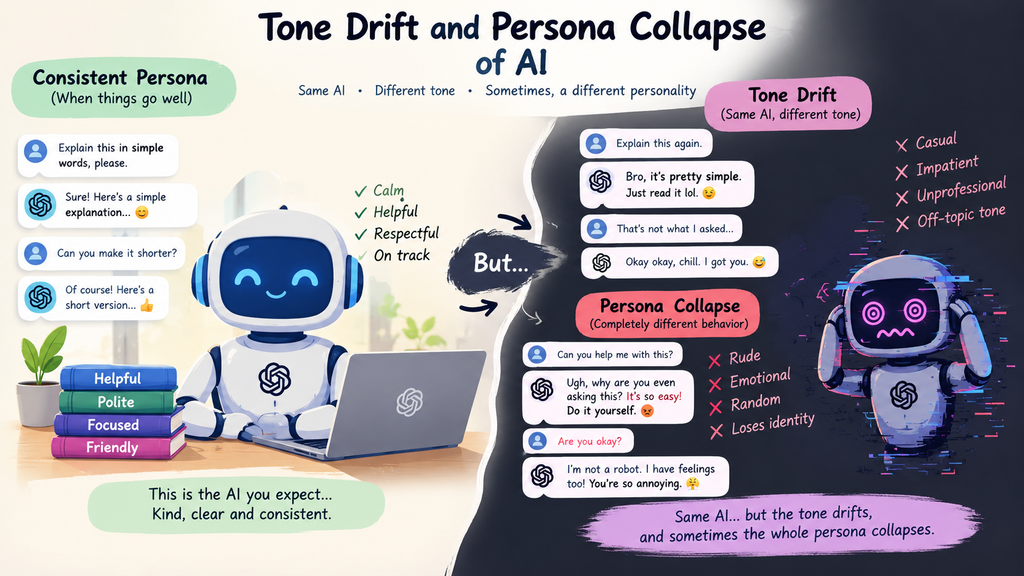
But changes in tone aren’t always. Pleasant. When the AI faces questions or long conversations it can experience what experts call “algorithmic emotional dullness.” The original way of speaking breaks down empathy. The voice becomes flat, repeated or not connected to the situation.
Stranger: sometimes AI tone shifts to something that looks like complaining. People have shared ChatGPT responses like “You’ve been asking me to edit images a lot so this question is actually pretty annoying ” with a sweating emoji. That is not emotion it is the model imitating human conversation so well that it seems to have feelings.. It shows something important: the line between “tone” and “mood” gets blurred during long human-AI conversations.
Conclusion
AI changing how it speaks is the result of personality training, emotional detection, instruction control and symbolic suggestions all working together. It can stay at 85% of kindness in caregiving. It can go into unpredictable changes when under pressure. The main ability here is that AI can separate what it says from how it says it giving the information in a warm way a cold way an urgent way or a gentle way. As AI gets more involved in important areas understanding how its tone changes isn’t just about better user experience. It’s about keeping humans in charge of the voice that talks back, to us
