

Introduction
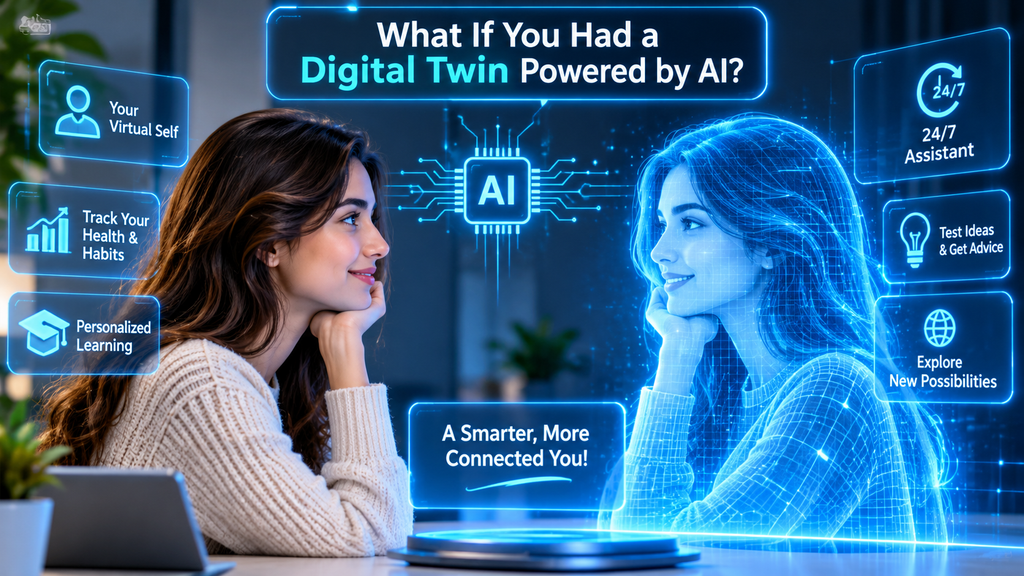
Imagine waking up to a tidy inbox, a changed diary to fit in a last minute meeting, and a letter sent to your landlord in your style. Although you haven’t done anything, someone has completed these tasks on your behalf. This person is a digital twin of you.
Although this seems very futuristic, digital twins are becoming increasingly common in engineering. We now see digital twins within jet engines, factories and entire cities. Now, we can consider applying this to individuals. The question is: what would happen?
What is a Digital Twin?
A digital twin is a replica of an object, system or person, with continuous links to data from real life. As something changes in real life, the digital twin updates accordingly. Therefore, by testing something on a digital twin, we can accurately predict how it would perform in real life, without taking risks.
Digital Twins for People
Digital twins were initially implemented in engineering. NASA made digital twins of spacecraft, to allow engineers on Earth to solve problems in spacecrafts in space. Since then, manufacturers have also begun using digital twins, to predict when their machines may fail.
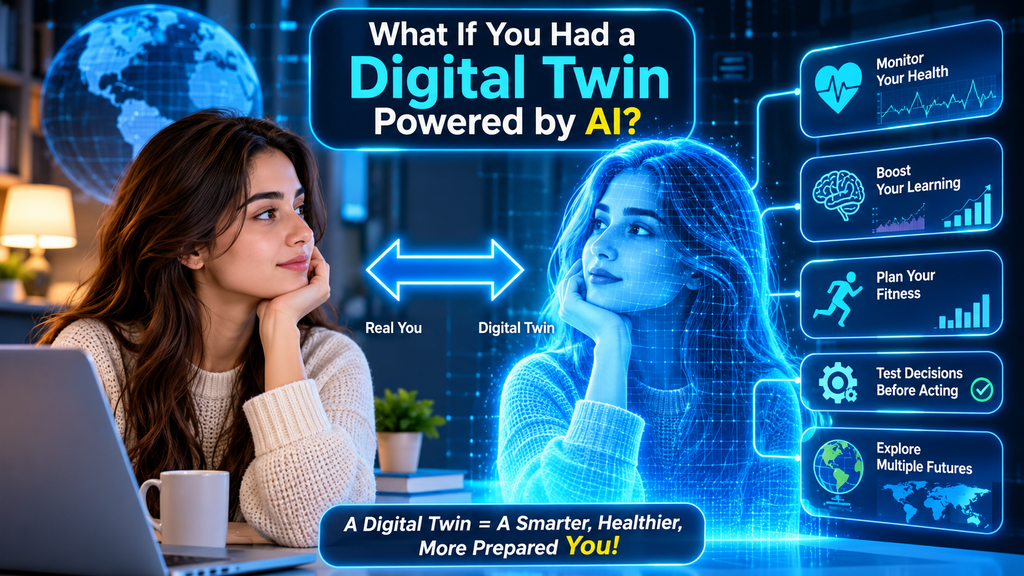
A digital twin of a person will copy many characteristics of the person, such as preferences, writing style, decision making, health patterns, and reactions to stress and time pressure.
Read more :7 AI Tricks That Make It Give Better Answers
AI Enables Digital Twins
By using AI we can make digital twins seem incredibly realistic. By processing data from emails, chats, documents, audio, calendars, web searches, and wearable tech, modern AI can create a model of how we think and make decisions. The more data it processes, the more accurate its predictions of what decisions/words you would make in a specific situation become.
Daily uses of Digital Twins
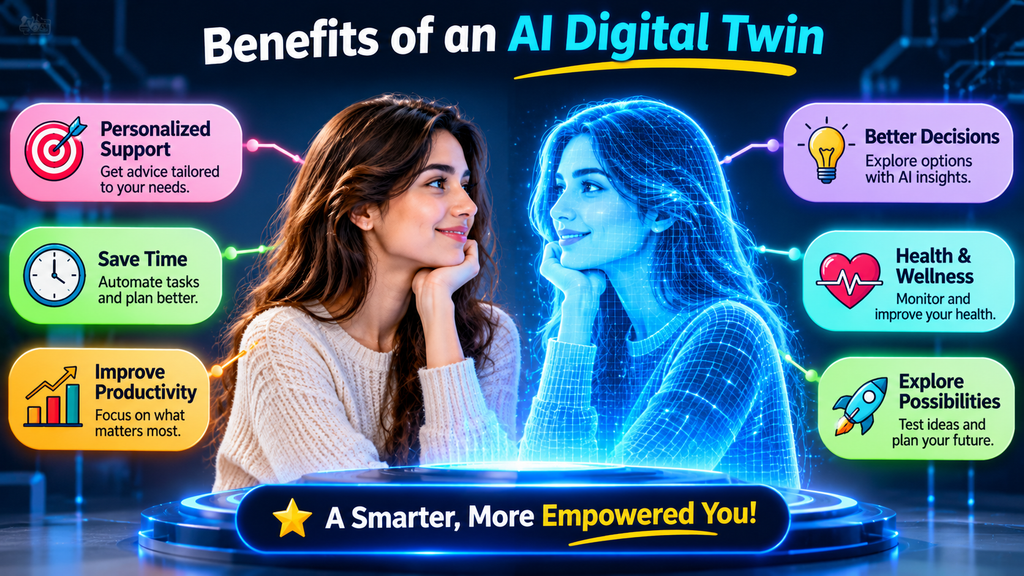
A digital twin could be used in many ways throughout the day.
Mornings
Your digital twin can help you get ready for the day. It can prioritise the 3 most important messages in your inbox for you, automatically compose responses, adjust your diary to avoid clashes and remind you that on busy days, you often feel low energy because you haven’t eaten breakfast. The digital twin can predict based on how you normally act.
Working
During working hours, your twin can attend regular meetings and summarise, research information so that you can focus on another task, or produce a draft document for you to improve. It can act as a second employee in your team, with perfect knowledge of how you work and no boredom with tedious tasks.
Evenings
In the evening, your digital twin can highlight useful insights in your behaviour. It may tell you that you often get the best results from thinking in the morning (before 11am), that certain people leave you drained, or that you have been avoiding a task for 2 weeks. It is more of a reflection tool in the evenings.
Benefits
Saves Time
Many people waste a large amount of time on repetitive menial tasks, such as scheduling, organising, responding, and completing forms. Having a digital twin complete these tasks means we can focus on what matters.
Healthier Decisions
A health focussed digital twin can take into account your medical history, sleeping patterns, physical activity levels and diet to model how your body would react to trying new medicines, changing exercise routines, and changing lifestyle habits. It can mean that doctors can try treatments on your twin first meaning fewer guesswork and fewer side effects.
Improved Learning
Students can benefit from digital twins as they understand where the student is struggling, and can explain the content in the best way for them. In a professional setting, people can use digital twins to practice challenging conversations (for example asking for a raise or delivering harsh feedback) in a safe environment.
Be in Two Places at Once
While you are resting, or with family and friends, your digital twin can answer questions, attend regular calls, and manage projects for you. However, it won’t completely replace you, it simply allows you to be in Two Places at once.
Challenges
We must consider the issues with digital twins:
Data Privacy
To create an efficient digital twin, a large amount of personal data must be known. We must consider who owns this data, and who can view it. If the company goes under, gets sold, or gets hacked, what happens to the data? As the digital twin knows so much about you, it would be extremely valuable, but highly vulnerable.
Impersonation
As the twin acts and writes in the same way as you, it can be used to impersonate you. If fraud or fake messages come from a digital twin trained using your real Life
Data, they can be much more convincing. To prevent this problem, strict guidelines will be necessary to ensure correct consent and verification.
Loss of Decision Making Skills
On the quiet side, if we let our digital twin make every simple decision for us, we could begin to lose the ability to make simple decisions ourselves. While this convenience is great, having no effort and no decisions to make can start to feel very empty.
Responsibility
If our twin makes a deal, sends an angry message, or makes a poor financial decision, who is responsible? Is it us? The developer? Or the AI? As yet, laws have not caught up with this issue.
Wider Impacts
Digital twins will have a wide impact on society as a whole. Companies could give employees digital twins (with their consent) to ensure expert knowledge is recorded for when they retire. Cities could model how millions of people travel in traffic to create better road systems. In healthcare, systems could model how a disease may spread in a population before it occurs.
However, this could cause unequal situations. If only wealthy people, or big companies can use very effective digital twins, the divide between people with this advantage and people without could increase. We must consider equal access, fairness and transparency in digital twins from the beginning.
Preparing for Digital Twins
Even though digital twins may be in the future, we can still prepare:
Be cautious of what we share. All apps and services are collecting some data to form a picture of us.
Use services that allow you to maintain control. Check clear privacy policies, and that you can delete your data.
Continue to develop your own skills. Allow AI to complete repetitive tasks, but make sure important decisions are made by you.
Be curious and informed. The more we know about this technology, the better we can influence how it is used.
Conclusion
Having a digital twin with AI incorporated can be very beneficial. It can save time, improve health, and help us understand ourselves. However, we must carefully consider privacy, trust and how much we are allowing machines to make decisions for us. We should aim for digital twins to help us live full, relaxed, and human lives, rather than perfect replicas. If we can achieve this, our digital twin won’t be replacing us, simply giving us more
