

Introduction
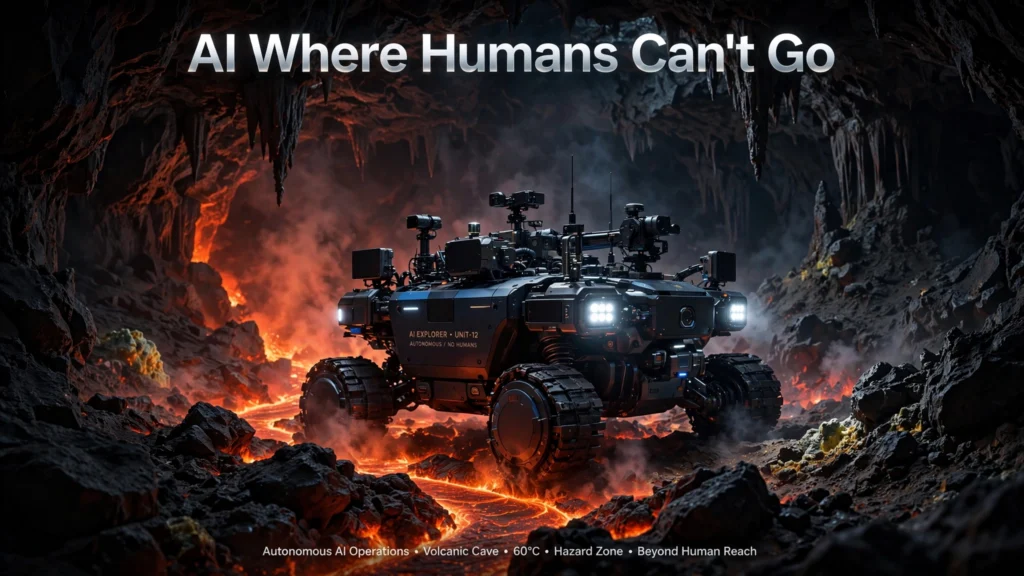
The basic idea behind putting intelligence into dangerous places is simple and important: some places are just too risky, too far away or too hard to reach for people to go safely. Whether it is the pressure of the deep ocean, the radiation-filled areas of a nuclear place the huge darkness of Martian caves or the broken pieces of a building that fell down these areas need abilities that are more than what people can do. AI machines are starting to go into these places not to take the place of people but to help people go further and keep people safe. This article looks at the areas where AI is working at the edge of what people can do the tools that make this change possible and what it means for science, work and safety.
The Deep Ocean: Earths Inaccessible Frontier
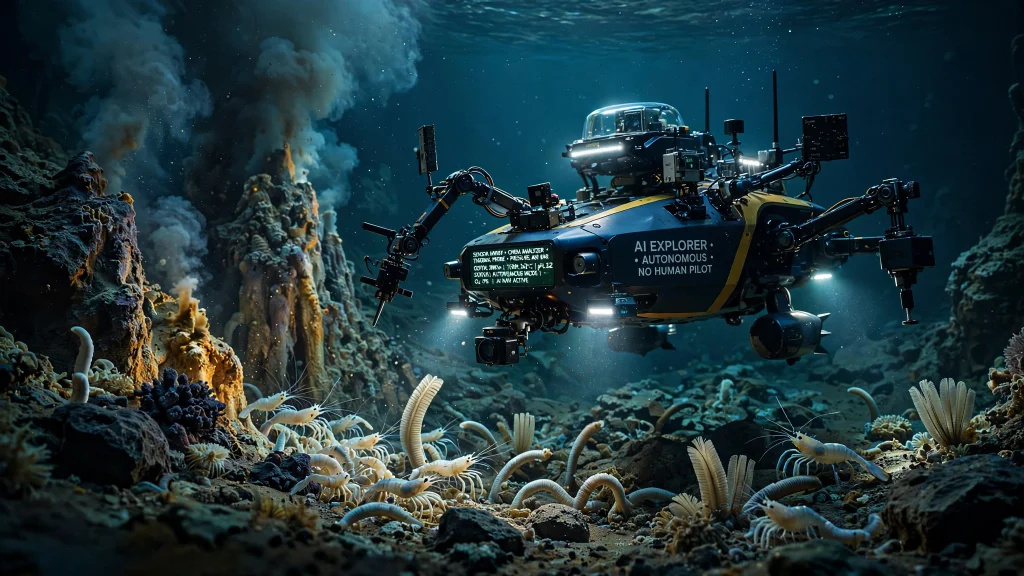
The hadal zone is the deepest part of the ocean going from 6,000 to 11,000 meters. This area is one of the known parts of the Earth. Since 1960 about 50 times have people or machines gone all the way to the bottom of the trench compared to 12 times when people landed on the moon. The problems are very hard: at 11,000 meters every part of a machines outside has 1.1 tons of force and regular containers take more than 80% of the space just for floating. Navigation is just as hard as GPS signals don’t go more than a meter under water and the way sound moves makes the positions off by up to 50 meters.
AI powered machines that work underwater are solving these problems. The HADEXION system for example suggests a way where many small machines work together to find where they are and share what they learn changing how they look for things as they see things. On the side of seeing China has made the machine that can look at deep sea places DePTH-GPT, which uses deep learning, big language models and pictures to look at videos, the ground, the water movement, the dirt and the sounds of living things. This machine is used on the deep sea machine “Jiaolong ” helping to find the deep sea animals as the machine goes down.
Nuclear Environments: Removing Humans from Harms Way
places and the work to fix them are some of the most dangerous jobs. The UK Nuclear Decommissioning Authority has a goal: to cut the amount of work done by people in dangerous areas by half by 2030. This is being done with machines that use AI.
Robots that walk on four legs like Spot are now often used at places where people have to do jobs like turning off power switches so people don’t have to go into dangerous places. The AutoSaS system will be used in Oldbury in 2028. It can. Separate radioactive things by itself which was done by people before. Small flying machines have shown they can work without seeing where they are in places with no light checking nuclear places through places that are hard to get to.
At CERNs machine that makes particles the UK Atomic Energy Authority has made a small robot called PipeINEER. It is as small as a mouse. Can check the 27-kilometer pipe. The machines tubes work under an empty space and at -271°C so people can’t go in. PipeINEER can go up to six kilometers on its battery using a machine that learns to find parts and tells exactly where they are without taking the tubes apart.
Space Exploration: Autonomy Beyond Communication Delays
Space is different: the delay in sending messages makes it hard for people to control from away and in some places like under the surface of Mars signals can’t get through. NASA is making machines that use AI the way people talk and the way machines see to help people when they can’t talk to the people in charge. These machines can help with health and work when the people on the ground can’t help.
For exploring the surface of a planet machines that walk on four legs are being made for looking under the surface of Mars. These machines have things like sensors cameras that see depth and ways to move on their own. They use machines that learn from data from Mars to see where to put their feet and walk on the ground. The machines have a way to get power from a machine above and send data back using wires, which helps with power and sending data when they are under the surface.
A robot made by a company named Unitree climbed to the top of a mountain in Ecuador at about 6,200 meters. The robot, named Pemba walked on slopes up to 30 degrees. Had AI, cameras, sensors and ways to send data using satellites to get information and watch places that are hard to get to.
Read more:Can AI Predict Dreams?
Disaster Response: Responders That Never Tire
After big accidents like earthquakes, mines that fall in and buildings that fall down the first few hours are very important but the places are often too dangerous for people to go. Machines that use AI are now going into these places first.
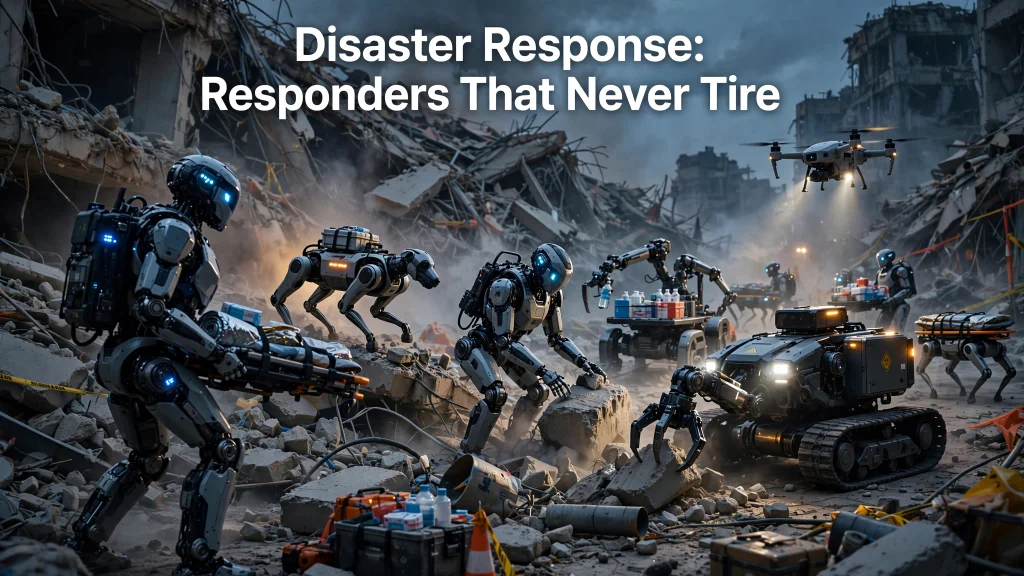
At a university people are making machines that walk on four legs to work in places where the internet doesn’t work. These machines can move through buildings find signs of people and keep going without needing power or the internet. The group is making the machines better at thinking on their own by using AI models that save power and work for longer. “In a disaster there are never people to check every spot or unstable place ” says the leader of the project. “Every bit of power saved is time in the field when lives might depend on it.”
In China a robot called “Reconnaissance Communication” made by a company called Deep Robotics has been tested in mines. The robot has legs, cameras that can see in two ways devices that find life sensors that check gas and a way to send messages. It can climb steep slopes go over big things and walk through water that is deep. The system uses a way that works on the spot and on a computer making a loop where it finds a problem checks it warns and acts and gives a red orange or yellow alert based on how bad the problem is.
Key Enabling Technologies
Conclusion
The move of AI into places where people can’t go is more than a new technology t shows a big change in how we look at exploring and staying safe. In the ocean AI is helping find out more about the parts of the Earth that we don’t know much about. In places with work it is keeping workers safe from being hurt. In space it is making it possible to do more when there is no way to talk to people on Earth. In places where disasters happen it is helping save time for people who are trying to save others.
The main thing that brings all these places together is not taking the place of people. Making them better. As the group that makes machines for space says the AI machines are made to “make people better helping them make faster smarter and more work possible.” The machine that goes into a mine first does not take the place of the team that is trying to save people; it helps them by checking for dangers and finding people before they go in. The AI that goes into a cave on Mars does not take the place of the person who will go later; it finds the way and the best places to look for something new.
The problems are still big. The way machines get power how they send messages and the way things change in places need more work, on making machines that can work on their own have better power and be stronger. But the path is clear: AI is becoming the important first step going where people can’t and in doing that making it safer, smarter and better when people do go.
