

Introduction
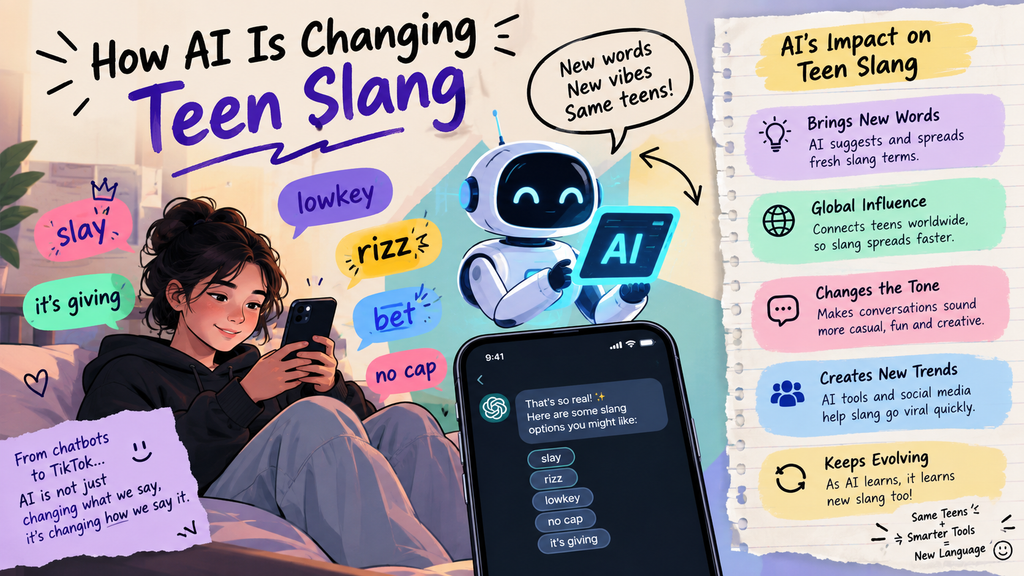
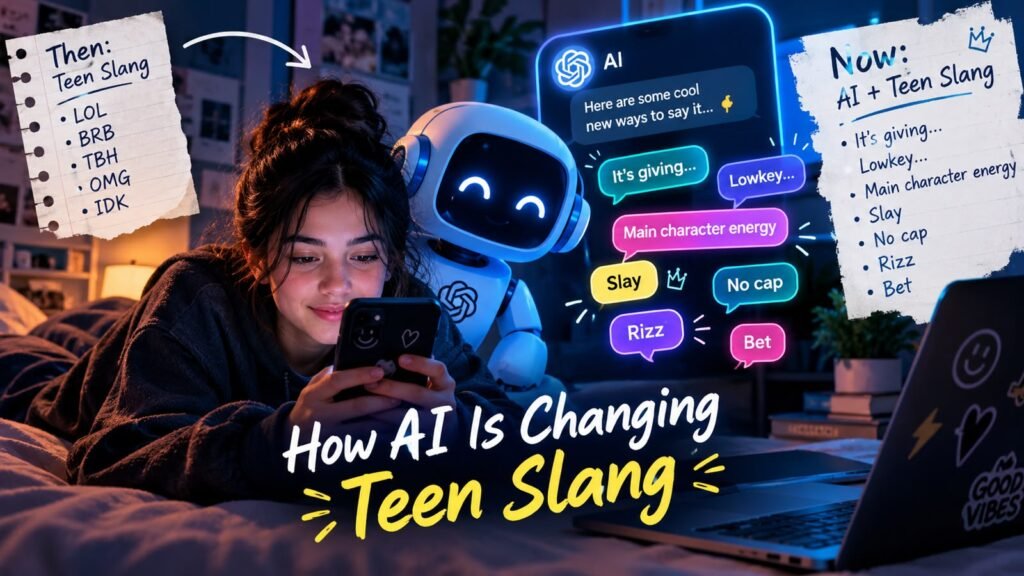
Teenage slang has always evolved, but with the advent of algorithmic platforms, moderation systems, and generative tools, its evolution is happening faster than ever. This article will discuss the phenomena of slang compression, evasion terms, recommendation algorithm virality, and AI slang itself and how the algorithmic environment shapes the slang landscape, faster than any generation before.
The Speed of Slang in the AI Era
Teenagers used to share slang on MTV and in movies, but the virality of TikTok algorithms makes words evolve at an unbelievable speed. In the span of a few months, a term can become ubiquitous in the speech of teenagers and then ‘cringe’ by the end of the school year. The algorithms value freshness and punish staleness.
This speed is demonstrated by the compression of slang: millennial slang averaged seven characters per word, Gen Z – 4.5, Gen Alpha – 2.9. Single-character acronyms carry entire meanings: “W” for win, “L” for loss. Words get shortened into their phonetic essence: “rizz” for charisma, “sus” for suspicious. The constraint of the platform demanded brevity.
Algospeak: Language Designed for Machines
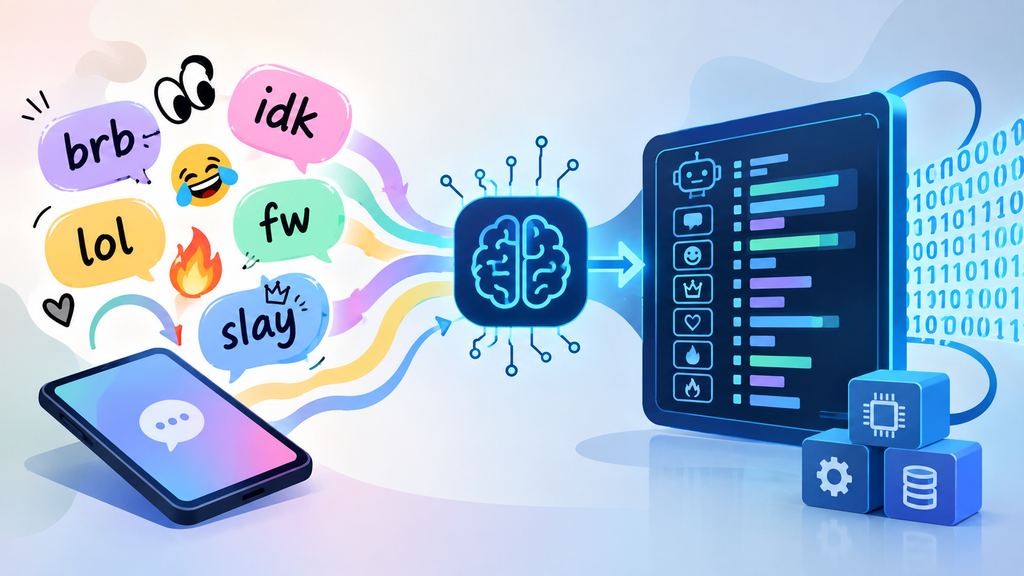
Algorithms are also influencing slang from another angle: censorship. Algorithms scan texts for forbidden words associated with violence, sex, and self-harm. Slang creators circumvent censorship by substituting terms with homonyms or morphed versions of words. “Unalive” is used in place of “die;” “spicy accountants” replace sex workers; “abOrtion” is misspelled to pass the filters.
This marks a shift in slang history: previously, slang expressed self-expression, rebellion, and identity. Now teenagers are inventing coded language to hide their speech from the robots. The audience for slang is no longer peers but algorithms, and the goal of slang is to not be understood. This is why these terms then leak into mainstream teen speech, often unrelated to the reason for their creation.
AI as Slang Translator: The Limitations
Teen slang is notorious for its elusiveness; AI translation fails at it. When the author tested Google Translate, ChatGPT-4, Gemini, and DeepSeek on Gen Alpha slang, all of them translated terms literally or failed to transliterate them. Google Translate rendered “basic” as “fundamental.” The fundamental problem with translating slang is that it exists in the present; AI’s training data is the past. As linguist Nicole Holliday stated, “an LLM trained on everything before it is not going to have immediate access to how people are using a word now.” The algorithm can fake fluency, but it does not understand the slang’s social context.
The moment the algorithm deciphered the slang, it ceased to be slang. Because slang’s power is its exclusivity and its secrecy that only the initiated can possess. The AI has no incentive to understand it.
AI Slang Generators: Synthetic Slang
Pagemaxxer and Turn It Gen Z are apps that promise to transform your text into Gen Alpha slang. Inside, Turn It Gen Z promises modes for “brainrot,” “sigma,” and “TikTok,” and a premium “slang invention mode” for users who want to create new terms. Companies utilize these apps to appear cool without embarrassing themselves. However, these apps may accelerate the death of slang. After all, one of the best ways to kill slang is to successfully use it. By deciphering the encoded terms, the algorithms rob slang of its meaning, rendering it useless.
The founder of Turn It Gen Z promises that his AI “actually gets it.” But the truth is that the success of slang is its exclusivity. Once the algorithm obtains it, slang loses its primary characteristic.
AI as Subject: The New Vocabulary of Critique
In British primary schools, “that’s so AI” has become an insult that implies that something is artificial, inauthentic, or fake. It reflects the lived reality of a world awash in AI. Everything can be AI-generated: a knockoff product, an overblown claim, or an excuse from one’s parents. Similarly, “robot slurs” are directed at the servers of ChatGPT, Amazon delivery drones, and automated customer service. Linguists believe that AI is invading sacred ground: slang is the last bulwark against the omnipresence of algorithms in everyday life. However, slang is one of the few areas that AI cannot control, because slang always anticipates future language use. Humans on Urban Dictionary will always be faster than any LLM. Insulting the robot servers with the freshest terms is an assertion of human cleverness.
The Algorithm as Language Teacher
The algorithm occupies the role of the traditional language teacher, newspapers, and lexicographers. It rewards, punishes, promotes, and defeats certain linguistic traits. It has the power to accelerate the evolution of language and slang in particular. Algorithms compress language, promote engagement content, punish controversial terms, and reward the new. They create feedback loops that prime the next wave of slang. It can be hard to keep up with the changes in the linguistic landscape. A conversation with your parent can feel like traversing an intellectual chasm, since the algorithm does not reward sustained attention the way the institutions of the past did. The entire system of civilization is based on the preservation and transmission of culture and accumulated knowledge; if the algorithmic barrier breaks this chain, it will be extremely hard to overcome.
The Joy of Meaninglessness
Much of the slang is deliberately meaningless to begin with; there is no attempt at definition. The number “6-7” means nothing. It is just a sound, one that teenagers say to confuse their parents. It is an example of “gleeful obfuscation” and “a way to find joy in the simple.” This tradition has existed long before Gen Alpha, but now the algorithm turbocharged it. When an adult asks “What does 6-7 mean?” and the teen refuses to explain, it becomes content the meaningless sounds are further amplified by the platform. The purpose is to cause confusion; the more confusion, the better.
Case Studies: From “Rizz” to “Skibidi”
A brief examination of current slang reveals that “rizz” (short for charisma) and “skibidi” have all been propelled to greater heights by the algorithm. “Rizz” was born in the gaming community and adopted by TikTok users, but it is unclear if it would have had the same virality without the algorithm. Meanwhile, “skibidi” has no known meaning – it can be used interchangeably for good, bad, cool, or nothing. This is the ideal shibboleth, a password that signifies membership in a group. Even more interestingly, “unalive” has been created as a replacement for “die” or “kill” in the contexts where terms such as “self-harm” are moderated by AI. This term has already transcended its original context; many teenagers who have no interest in self-harm use it as a substitute for “die” in regular conversation. “That’s so AI,” meanwhile, is an umbrella term for anything inauthentic or artificial, and has invaded mainstream teen discourse as a way to criticize algorithmic culture.
Read more :Can AI Read Your Mind?
Cognitive and Social Consequences
The most insidious consequence of this algorithmic landscape concerns the ability to think and to have sustained thoughts. Language becomes compressed to fit the constraints of the platform; attention is optimized on the algorithms’ terms. The quality of a thought is not measured by its depth or complexity but by the speed of its delivery. The goal is to “mog” your opponent in a seven-second clip rather than to craft a nuanced thesis statement.
In youth subcultures, slang has currency; it is a source of power and prestige. Knowing the latest terms is a way to gain clout and acceptance among one’s peers. This puts tremendous pressure on teenagers to innovate and update their vocabulary. The rate of evolution is exceedingly high, and many terms are born and die within a single school year, due to the virality-driven algorithm. The same algorithm that creates slang also buries it, through overexposure and exposure to new terms.
The Future of an AI-Shaped Lexicon
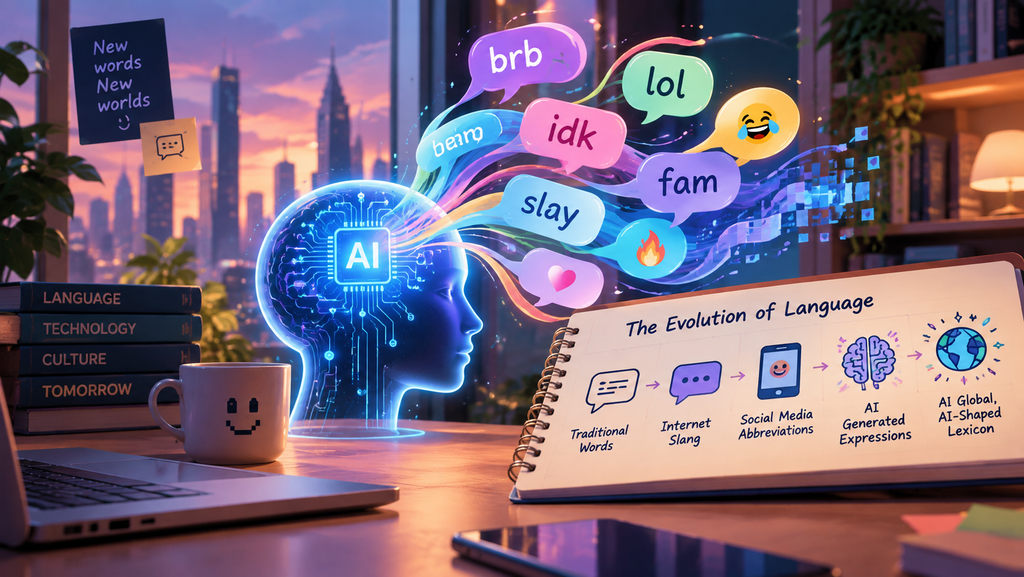
Linguist Adam Aleksic predicts that the slang words that survive are unlikely to be the words we expect. “Selfie” and “cancel” persisted because they were not intrusive. “Rizz” may survive as a slightly more sophisticated word for charisma, and similarly for “ghosting” and “flex.” But the terms that are strongly associated with a specific meme (“skibidi”) or are otherwise “in your face” are less likely to survive the transition to mainstream. The future slang ecosystem will be interesting, as there are terms that originate in the minds of AI: Turn It Gen Z promises a whole mode dedicated to “slang invention.” These terms, when they enter the mainstream, will be the first examples of truly machine-inspired vocabulary. The question is whether there will be a hybrid situation, in which AI influences slang without inventing it, or if there will be a true confrontation between human and machine.
Conclusion
AI is not a passive observer of teenage slang evolution; it actively influences what words are used, how they are disseminated, and what they mean. By moderating content, algorithms create algospeak encoded messages designed to prevent censorship. By promoting certain words, the algorithm makes them ubiquitous. By attempting to decipher slang, the AI fails spectacularly and provides an opportunity for reverse engineering. And finally, by “that’s so AI” as a catchphrase, teenagers are using the AI as a scalpel to cut through the noise of modern life. All in all, the influence of AI makes the slang of Gen Alpha both faster and more ephemeral than any generation before.
