

Introduction
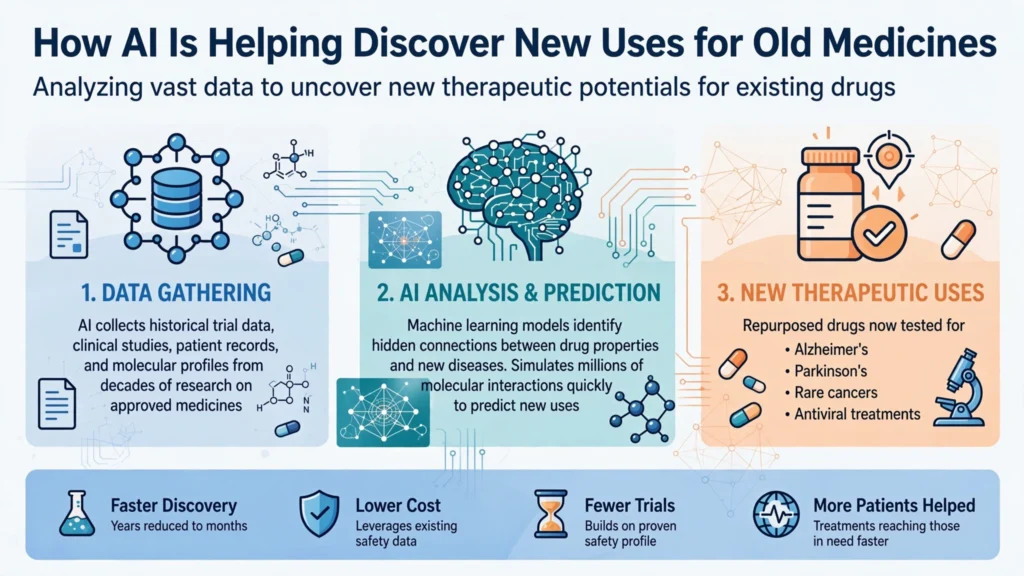
A medicine for gout that was approved forty years ago is now being looked at as a treatment for breast cancer. A drug that is used for dysfunction has been connected to a 69% less chance of getting Alzheimers disease. A drug that was used to help with the side effects of methotrexate helped some children with autism speak their words.
These sound like mistakes. They are now being created more and more by intelligence systems working across large amounts of data.
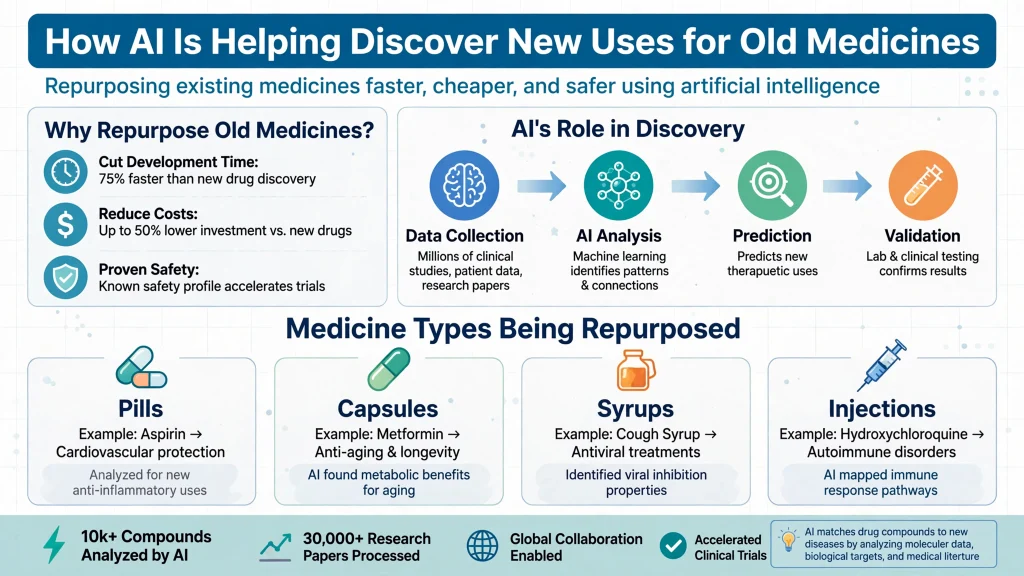
Drug repurposing using medicines that are already approved for reasons is not a new idea. The story of aspirin changing from a pain reliever to a heart disease preventer and the change of thalidomide from a morning sickness medicine to a treatment for myeloma are well-known examples.. Traditional repurposing depends on researchers occasional ideas or limited reading. It is slow not very efficient. Depends a lot on luck. AI is changing this process from “hitting upon” to “calculating chances ” changing how drug discovery works.
Why Drug Repurposing Matters
To see why AI is important here you first need to understand the size of the problem. There are 4,000 drugs that are approved by the FDA. There are than 18,000 diseases known in humans. About 14,000 of these diseases have no treatment that is approved. Around 300 million people worldwide have conditions that have no medicine.
The old way of making medicines finding one disease and one new drug taking 10 to 15 years and about one billion dollars cannot close this gap. For diseases and small groups of patients the money just does not work.
Repurposing gives a way. For a drug that is already approved data on safety how it moves through the body and how it is made already exists. If a new use is found early safety tests can be. The drug can go straight to testing if it works. The time can go from over a decade to three to five years. The cost is much lower.
The question is: among 4,000 drugs and 18,000 diseases how do you find the thousands of pairs that might actually work?
How AI “Thinks” About Repurposing
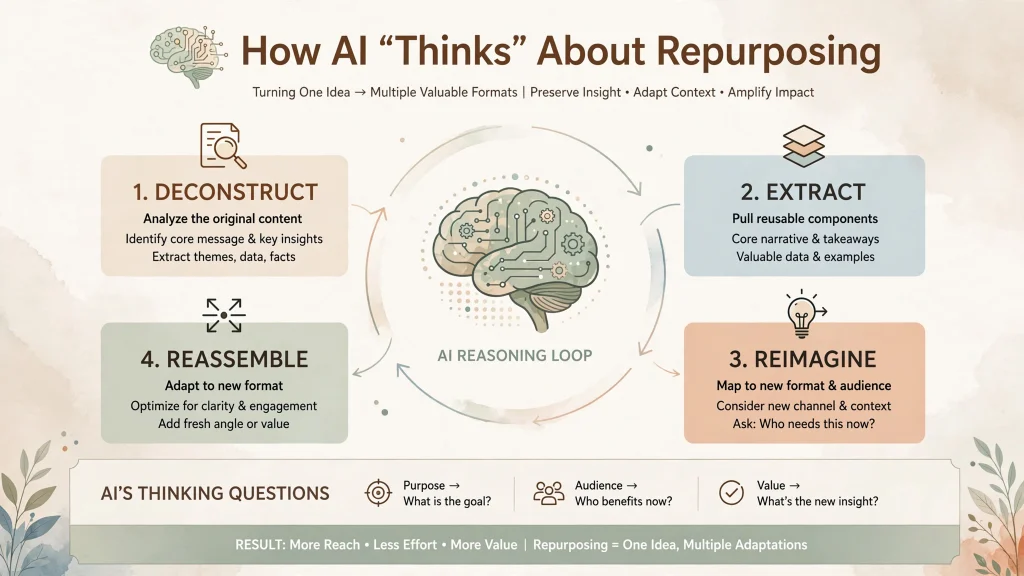
Human researchers usually start with an idea: a drug affects a target that target is involved in a disease so the drug might help. This way of thinking is limited by what the researcher knows and imagines.
AI uses a way. Take Every Cures MATRIX platform. It does not start with any idea. It looks at all drug-disease pairs at the time using a knowledge graph to measure how strong the evidence is for each pair. This way it can find links like lidocaine lowering the risk of breast cancer returning that a human researcher would almost never think to test.
At the level the main methods that power AI-based repurposing work on several layers.
Graph neural networks see drugs, proteins, pathways and diseases as points and lines in a graph learning from messages to predict drug-disease links. A study on melanoma used the GraphPert method to spread signals across a network of proteins and found HDAC inhibitors, proteasome inhibitors and PARP inhibitors drugs that have different targets but similar effects.
Large language models are used to find evidence in amounts of research. The TheraMind system, using GPT-4o-mini, Gemini-2.0-Flash and Llama-3-8B looked at 10,023 articles. Found 26 cases about lung cancer repurposing getting 77.8% correct and almost 100% accurate.
Generative AI does more: it doesn’t just look at existing drugs. Can change chemical shapes while keeping known effects making it better at being selective lowering side effects or making it work for new reasons.
From Computer Prediction to Real Testing
AI predictions are the start. The real test is seeing if it works in life. Some AI-discovered ideas for repurposing are now in trials.
Lantern Pharmas LP-100 (irofulven) found by its RADR platform is in Phase II trials for a type of prostate cancer. Recursions REC-994 which targets a brain condition is in Phase II testing. Insilico Medicines INS018-055, found by AI is being tested in people with lung disease.
Every Cures results are very clear. The group got up to $76 million from ARPA-H to work on 20 projects and support 10 ideas into trials. Their system found adalimumab, a drug that blocks a protein for people with Castleman disease who did not get better with other treatments. The patients got better for over two and a half years. The case was in the New England Journal of Medicine.
Another famous example is leucovorin for kids with a brain condition. After Every Cures system found a link some kids started talking within days. After a news report prescriptions for leucovorin went up three times.
The “Lucky” Links AI Finds
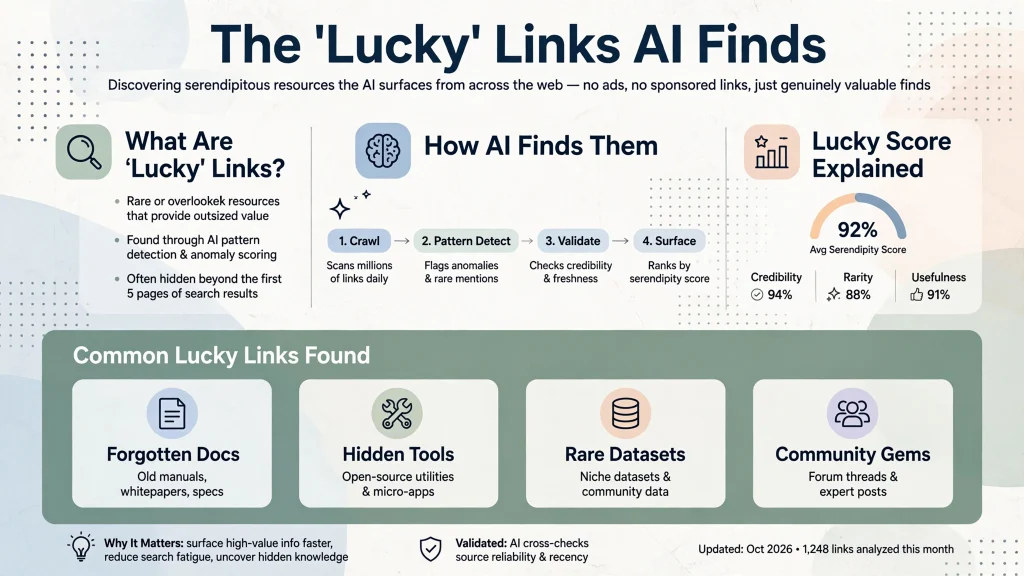
AI systems are able to find links that human researchers would not think to test.
Feixiong Chengs team at the Cleveland Clinic used AI to look at records from over 7 million people and found that people who used sildenafil (Viagra) had a 69% lower chance of getting Alzheimers. This was confirmed in two studies with a reduced risk of about 54%. Chengs work also found that simvastatin, a drug for cholesterol was linked to risk of Parkinsons disease with a chance of 0.91 that stayed significant after checking many other factors.
In breast cancer a study in Scientific Reports used a forest model to look at 1,615 approved drugs for a possible effect on a certain protein. Allopurinol, a drug for gout was found to work in all six ways tested and computer models showed that it stayed linked to the proteins spot.
The Chagas disease case shows another way. Researchers used a machine learning model to look at a group of compounds meant for SARS-CoV-2 and found ones that blocked an enzyme. Some of these were better than known ones. This is an example of how research on COVID-19 helped a disease that is not well known.
Technical Data Issues
The promise of AI in repurposing is real. There are also problems.
The ” box” problem is a big one. AI models can make predictions. Can’t explain how they did it. For doctors and regulators a prediction that can’t be explained is hard to trust. Methods like SHAP are being used to explain why models made choices but biology is very complicated and full understanding is still far away.
Data bias is another problem. Biomedical databases have positive results than negative ones making models seem better than they are. Also clinical trial participants have been mostly white and male which raises questions about how models work for other groups. Time bias is also a problem: older studies used methods than modern ones and models might learn about the time period instead of real biology.
The jump from computer predictions to tests is still big. A drug that works in the computer might fail in tests with cells in animals or in people. AI can help find candidates but it can’t replace real testing.
Read more: Why AI Search Feels Different From Google
Conclusion
Drug repurposing is a search problem: finding the pairs of drugs and diseases in a huge world. Human researchers can only look far. AI can look at the medical knowledge network.
This does not mean AI will take the place of science. In fact AIs help is in pointing experiments to the best options. David Fajgenbaum from Every Cure is an example he found a drug for his own illness while in bed and now his group is using AI to make such personal successes into a system.
From one patient finding one drug to all drugs for all diseases this is more than making things bigger. It is a change in how discovery works. As AI starts to look through records, for us links that were missed, forgotten or never thought of are becoming the start of new treatments.
