

Introduction
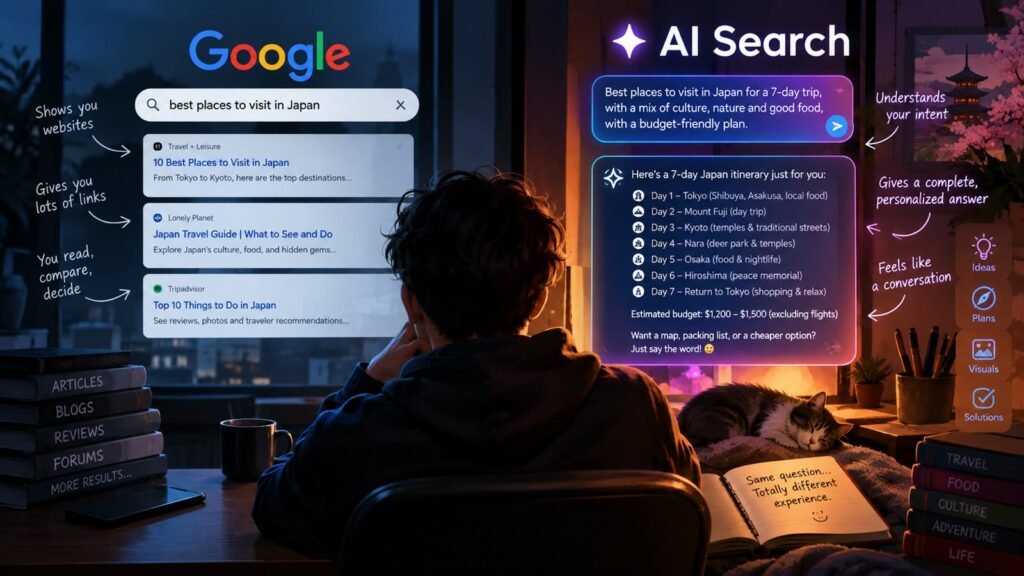
For than twenty years Google has been the main door to the internet. It has taught us to search with words look at links and decide which sites are trustworthy by their order. New AI search engines such as ChatGPT, Perplexity and Google’s own AI Overviews have changed this routine. Than a list of links AI search gives a single answer in plain language. This change is felt not in how we see the page but also in our thoughts how much we trust and how we look for knowledge.
The Architecture of Traditional Search
Keywords, Links and Rankings
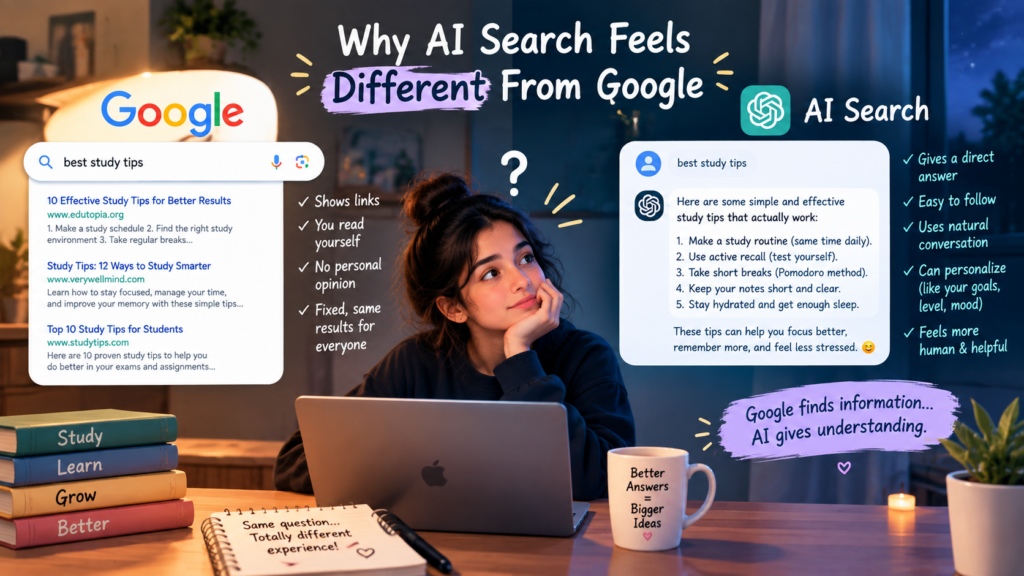
Google’s system works by finding and pulling. It crawls billions of pages keeps them in its database and then matches your words to the matches. The result is a ranked list of ten links. These links show voices, opinions and sources. The user clicks, reads, compares and makes a choice.
The User as an Active Researcher
In this model the user must make all the judgments. The user checks who wrote the page when it was published and whether it is biased. This can be tiring. It teaches how to read information. Google does not tell you what to think; it shows you where to look.
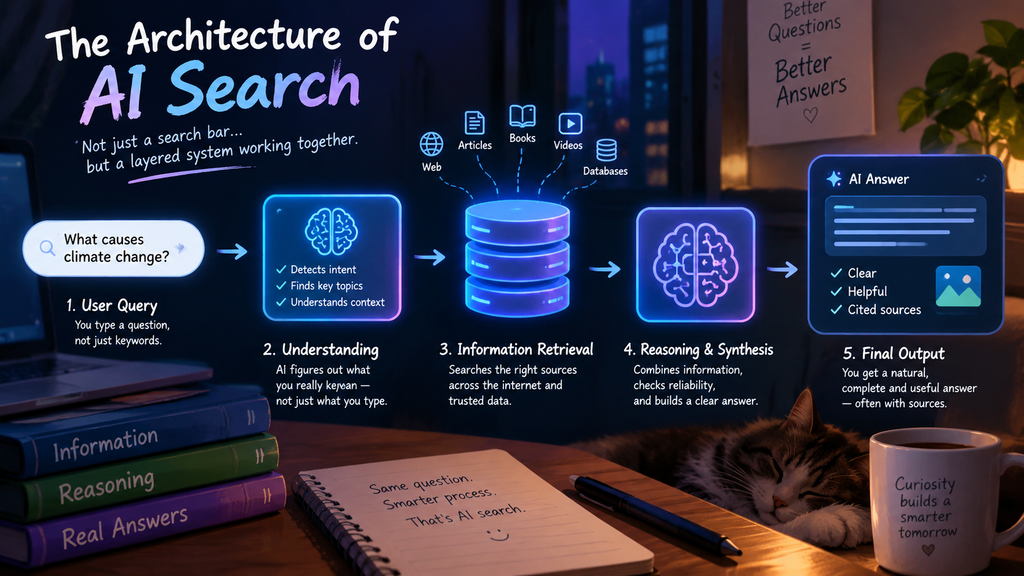
The Architecture of AI Search
From Retrieval to Generation
AI search does more than pull. It creates. Large language models take data from their training. Sometimes from the live web to write a direct friendly answer. The user receives an answer, not a starting point.
The User as a Passive Recipient
With AI search the user becomes a receiver of conclusions of a gatherer of facts. The work of sorting and putting together facts is done by the system. This feels easy. It also means trusting one system’s view instead of forming your own.
Read more:Is AI Making Us Lazy?
The Illusion of a Single Truth
Googles Pluralism vs AIs Singularity
Google’s format shows that knowledge can be many and disputed. Different sites may. The user must decide which is best. This messy open structure mirrors how real information is.
The Confidence Problem
AI search gives one tidy answer. This looks like authority. Even when AI makes a mistake the tone sounds sure. Users who are used to Google’s list may lower their guard. Accept the AI answer as fact, not one of many opinions.
Conversational Memory and Context
Query vs Conversation
Google treats each query as a start. AI search remembers questions, tone and context. It builds a conversation.
The Dependency Trap
This makes AI search feel personal and easy like talking to a helpful friend.. It also creates a small dependence. You start to shape your thoughts through AI of before it letting the tool guide your path. Google waits for your command; AI. Guides.
Speed, Trust and the Verification Problem
The Instant Answer
Google is fast. Ai search is quick in another way. It does not just pull; it writes. This speed is exciting. It skips the pause where you would normally think carefully.
The Collapse of Verification
With Google clicking a link looking at a page and deciding whether to trust it is a built‑in check. AI search removes that step. Unless the user explicitly asks for sources, which many do not the answer comes ready. The check is moved from the user to the algorithm. That algorithm cannot be blamed.
The Psychology of Trust
Transparency and Black Boxes
Google shows you the source with links. AI search usually works like a box giving no clear idea of how it reached its answer. This lack of openness turns trust into faith than proof.
Dependence
The friendly tone of AI search lowers barriers to use. Also encourages quick acceptance. We trust what sounds human even when it is not.
Implications for Society and Knowledge
The Future of Information Literacy
If people stop checking and start accepting the group skill, for thinking critically may fade. The abilities to evaluate sources to cross‑check and to stay skeptical could shrink.
Who Controls the Answer?
When a single AI system becomes the gatekeeper of information the question of who trains AI, who audits AI and who benefits becomes urgent. Googles model spread power across millions of website AI search gathers power.
Conclusion
AI search feels different from Google because AI search changes our relationship, with information itself. Google made us hunters; AI search makes us receivers. AI search offers convenience and deep conversation but it also takes away the doubt and active thinking that old search quietly required. The question is not which is better. Whether we are ready to give up thinking effort for the comfort of being answered.
