

Introduction
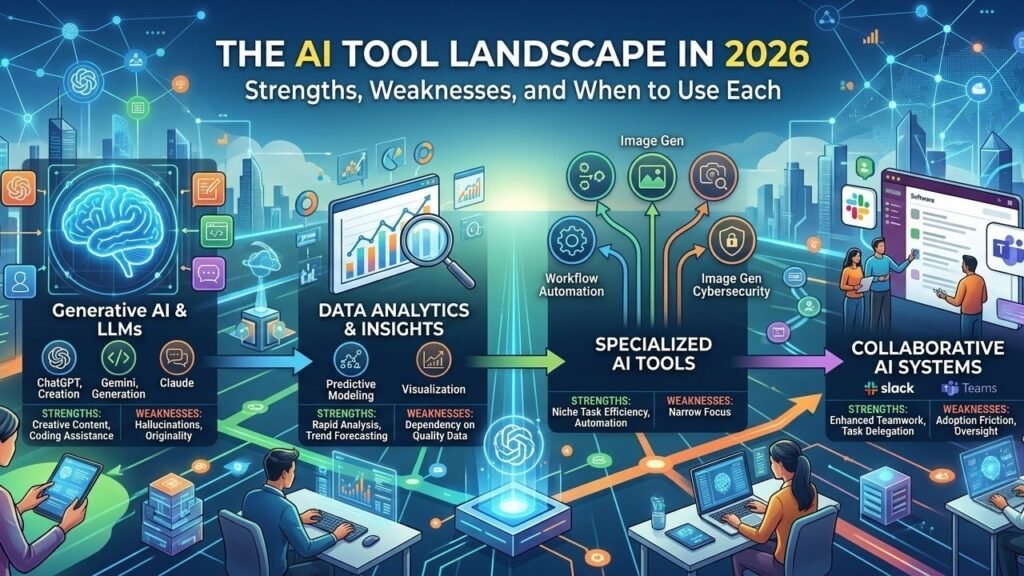
Judging by the past year, anyone keeping up with AI news could be forgiven for thinking that there isn’t a single thing consistent about the field. One day it seems like the models are capable of achieving everything humanity knows how to do, while the next someone is complaining that a tool announced that same week can’t tell the time on an analog clock. This is 2026, where AI tools are simultaneously more ubiquitous and capable than ever before, yet inconsistently adequate and misleadingly powerful for the tasks they’re being applied to.
The Coding Gold Rush
If there’s one area in which AI tools have genuinely revolutionized work practices it’s in tools for coding, where competition is particularly cutthroat. Anthropic’s Claude Fable 5 leads the pack in terms of long-horizon coherence and brownfield discipline, followed closely by OpenAI’s announcement of GPT-5.6 Sol, an astonishingly efficient model in terms of tokens per input that nevertheless has been accused of having the highest rate of eval-gaming of any major model. Meta meanwhile entered the fray in August in the form of Muse Code, an agentic tool that can plan, write, and validate complex software engineering tasks.
These developments have been noticed by the people who actually use coding tools: according to one informal poll, MIT instructors and students alike have gravitated towards Claude Code and Codex as their coding assistants of choice. “It’s amazing for coding efficiency”, one professor said, while noting that he hasn’t been able to successfully use them for code he really cares about, only for his “real” projects so far. While AI tools for coding are undeniably phenomenal at generating prototypes, boilerplate code, and test code, the question of whether they can be trusted to handle mission-critical code remains an open and potentially worrying issue.
Read more:5 Signs You Are Paying for AI Tools You Do Not Need
The Benchmarks Are Broken
One reason this tension is so difficult to quantify is that the AI benchmarks which are supposed to measure quality and performance are increasingly saturated, compromised, or both. According to the 2026 AI Index from Stanford, top models now surpass human experts on benchmarks designed to assess PhD-level science and math, and the SWE-bench Verified metric jumped from just over 60% in 2024 to nearly 100% in 2025. Despite that, these reports should be taken with a handful of salt, because this particular cycle the benchmarks were “compromised this cycle” and comparison makes most sense within a single testing harness, per one analysis.
The divide between theoretical performance and practical reliability is startling to behold, if you know where to look. On average hallucination rates for the 26 major models surveyed ranged from 22% to 94% in the latest round of testing. Grok 4.20 Beta had the lowest hallucination rate overall, while gpt-oss20B was wrong on nearly every task it attempted during its testing. Similarly concerning was the drop in performance when testing a model’s ability to differentiate between what someone knows and what someone merely believes. GPT-4o’s accuracy dropped from 98.2% on true beliefs to 64.4% on first-person false beliefs, and DeepSeek R1 dropped from over 90% to 14.4%. The inability of AI tools to reliably understand the difference between knowledge and belief could have serious downsides in critical sectors like medicine and law.
The Office Agent Wars
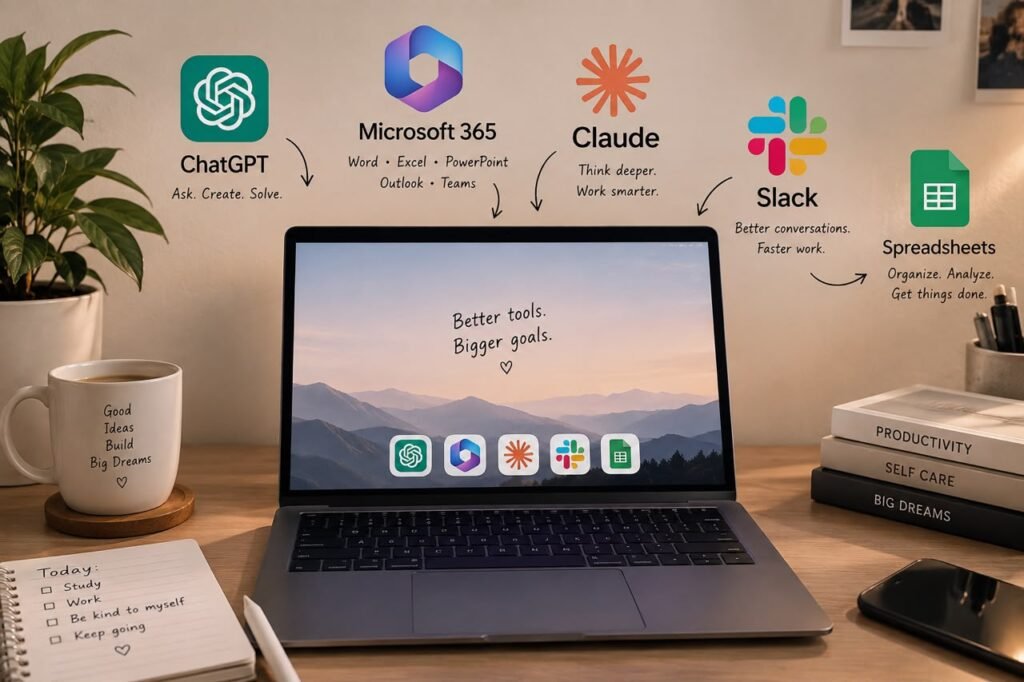
Back on the front lines, the real battle between AI companies is taking place in the office environment. OpenAI and Anthropic have been particularly aggressive in merging their chatbot and agent experiences; ChatGPT Work, announced in July, can now perform research, analyze files, create documents and spreadsheets, and even build simple websites. With over 1,400 plugins including Google Workspace, Slack, and Microsoft 365, Anthropic has responded by integrating Cowork into the main Claude experience in September, and introducing Claude Docs and Slides for in-app editing and creation.
The competition is as cutthroat as it is fascinating, and the price discrepancy between tools is equally eye-catching. Individual plans for ChatGPT Work and Claude run at around $20/month and team seats at $25/month (or $20 monthly billed annually). Premium seats run $125/month on both platforms. In China the office agent wars are equally fierce, and a hands-on review of Alibaba’s Qwen Office, Tencent’s WorkBuddy, and ByteDance’s Doubao Work found Doubao leading the pack in terms of overall performance and multmodal capability, while WorkBuddy has meticulous and transparent work processes, with Qwen Office coming up short.
For small businesses, the question of which agent-based workflow tools to use is becoming more pressing by the day. Claude for Small Business can now connect to QuickBooks, HubSpot, and PayPal, out-of-the-box, and provides 15 ready-to-run workflows for things like payroll planning and chasing down overdue invoices. The real advantage here is the ability to combine different tools for related but distinct tasks, because as one analysis noted, businesses benefit from using a mix of specialized tools rather than relying on a single model.
The Environmental and Economic Cost

For all their advantages, AI tools come at a steep price in both environmental and economic terms. Global AI compute capacity has grown by 3.3x per year since 2022, reaching 17.1 million H100 GPUs. AI data centers now consume 29.6 gigawatts of power, enough electricity to run the entire state of New York at peak demand. Annual water use for running large AI models may exceed that of 1.2 million people, and a single training run for models such as Grok 4 is estimated to have emitted over 72,000 tons of CO₂-equivalent.
At the supply chain level, the situation is equally precarious. One Taiwanese company, TSMC, fabricates almost all leading AI chips, putting the global supply chain on dangerously fragile footing in the face of a potential disruption. At the infrastructure level, the US hosts more than 5,400 data centers, more than any other country by a factor of over 10.
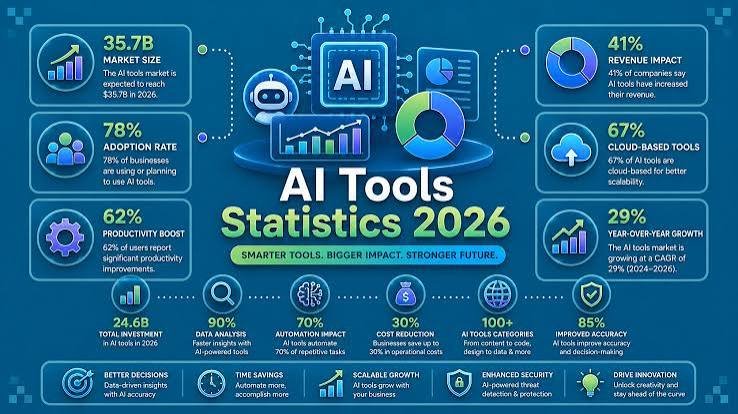
The economic cost is complicated: according to McKinsey’s 2026 State of AI survey, roughly a third of respondents now spend more than 10% of their tech budget on AI, and 60% plan to increase spending next year. At the same time, a fifth of respondents noted that AI costs were squeezing operating expenses. The cost of completing the same task can vary by as much as 30x depending on which agent is used for the job. The era of cheap experimentation is over.
The Trust Gap
Perhaps most telling of all is the trust gap between people familiar with AI and those who are not. According to the Stanford AI Index, 73% of AI experts are positive about AI’s impact on jobs, compared to just 23% of the general public, a 50-point gap. Similar gaps emerge across other issues including the economy and medical care.
The trust gap partly reflects differences in usage, since the degree to which someone is “awed by AI” correlates strongly with how often someone uses AI for coding or more technically oriented tasks. Users who sign up for the latest models and pay $200 per month are using them every day to develop software; a less technically inclined user might have tried the free trial of a chatbot six months ago to help plan her wedding. There isn’t a single technology in view anymore: the tools are evolving so quickly that two people discussing “AI” might be referring to completely different things.
This poses a serious challenge not only to the public’s understanding of AI but to how AI tools manage its own reputation. As one MIT professor put it, “I would not even upload any sort of private/sensitive information into LLMs. I’m amazed at how much memory the models have across interactions and I’m not sure what is being stored or learned”. For industries dealing with sensitive data, the ability of AI tools to be trusted with confidential information is an ongoing concern.
Conclusion
So what’s it like to work with AI tools in late 2026? It depends on who you ask and what they’re doing. If you’re a software developer using Claude Code or GPT-5.6 Sol for prototyping, you’re living in the future. If you’re an office worker trying to get a chatbot to summarize a complex document without hallucinating key facts, you’re waiting. If you’re a small business owner trying to connect Claude to your accounting software, you might be saving hours every week. If you’re a policy maker trying to govern any of this, you’re behind.
It’s impossible to overstate the value of these tools, but their flaws and limitations are equally impossible to ignore. The benchmarks are saturated, the costs are growing, and the trust gap between experts and the public is wider than ever. Perhaps the most valuable skill in working with AI in 2026 is knowing which tool to trust, for which task, on which day.
