

Introduction
Code review used to be a slow and intensely human-centric process. A senior engineer would review a request and leave comments about the code style, and then it would all take a week or more to merge. That process is vanishing fast in the last several years, code review has changed fundamentally as AI coding assistants have learned to assist, and sometimes dominate, the code review process. This article will explore how code reviews have changed with the incorporation of AI coding tools and the opportunities and risks that presents.
The Old Way: Code Review Before AI Coding Assistants
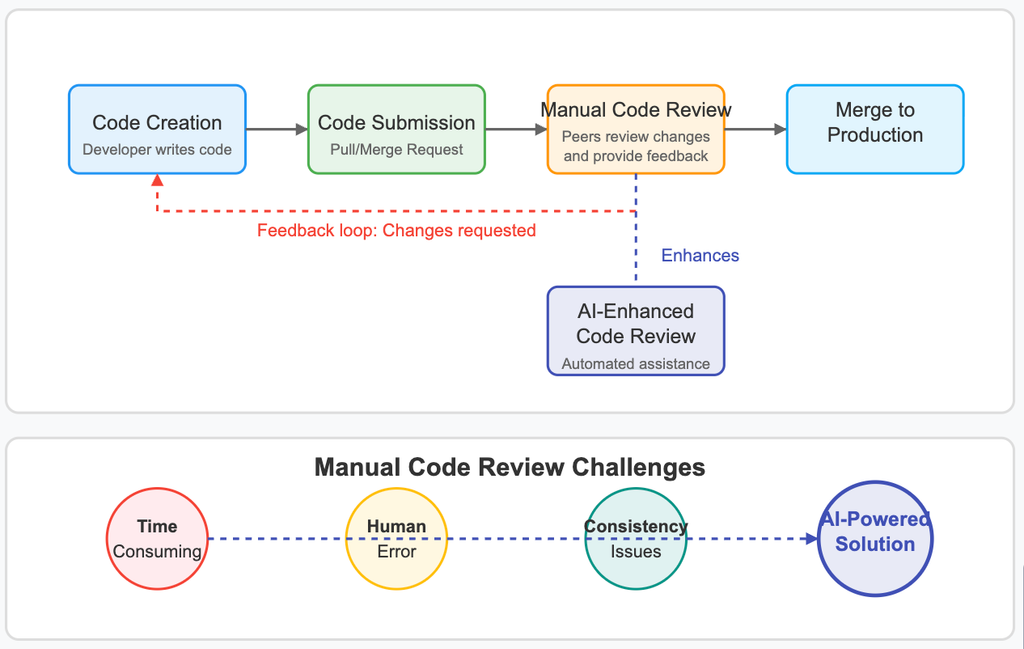
Before coding assistants became ubiquitous, code review was a primarily human endeavor. A developer would post a PR to be reviewed and a senior engineer would then read and evaluate the code on a line-by-line basis, looking for bugs, security vulnerabilities, and other weaknesses. That process was slow, time-consuming, and dependent on the reviewer’s availability and attention span it could take days for a PR to be reviewed.
Static analysis tools were used to augment the code review process, but they were limited and only caught a few kinds of errors. Human code review was necessary to catch logical errors or other high-level issues.
Read more:AI-Powered Translation and the Future of Languages
The Adoption of AI Coding Assistants
That system has changed fundamentally with the rise of AI coding assistants. The tools that fuel them have changed the way code is reviewed fundamentally. GitHub Copilot is just one example of a coding assistant that has evolved massively over the last several years, but the trends it represents are indicative of the space as a whole.
GitHub Copilot has over 20 million all-time users and 4.7 million paid subscribers as of January 2026, and 22% of merged code is authored by AI as of year-end 2025. That represents a major shift in the way code is reviewed, but it only tells a small part of the story that tool has penetrated to the point that 90% of the Fortune 100 use GitHub Copilot in some capacity.
Meanwhile, in the 2025 Stack Overflow survey, 84% of developers have expressed interest in using or already use AI-powered coding tools, but 46% of them have expressed some degree of distrust in the accuracy of the results.
In short, developers are adopting AI coding assistants at a breakneck pace, but many of them are aware of the risks and limitations of the technology and use it selectively and carefully.
How Code Review Has Changed With the Incorporation of AI Coding Assistants
Speed: From Days to Minutes
One of the most significant ways AI coding assistants have changed code review is by accelerating it. Pull requests that might have taken days to be reviewed can now be triaged by an AI in a matter of minutes or even seconds, catching obvious errors before a human reviewer even looks at the code. This has had a major impact on how quickly code can move through the review process and be merged.
According to GitHub’s 2025 Octoverse report, repositories that leveraged AI coding assistants saw a 32% improvement in merge time and 28% reduction in post-merge defects compared to those that didn’t. That represents a major opportunity for teams that are willing to adopt these tools.
Automated First-Pass Review
AI coding assistants are frequently used to provide “first-pass” review of code, catching minor issues and obvious errors before the code goes to a human reviewer. This means that the time spent by human reviewers on a PR can be focused on higher-value tasks like investigating the logic in the code and making sure that it actually does what it’s supposed to do.
Explanation of Why Issues Were Detected
Modern AI coding assistants offer significantly richer context and explanation than the static code analysis tools of a decade ago they often explain why a certain line of code might be a problem and suggest ways to fix it. That fundamentally changes the code review process, making the interaction with an AI feel more like a conversation.
Adoption of Dedicated AI Code Review Tools
Beyond the coding assistants themselves, there has been a rise in dedicated code review tools that sit inside the pull request review process and offer structured, automated feedback about potential issues in the code. These tools have seen extraordinary adoption according to GitHub’s 2025 Octoverse report, there are now over 1.3 million repositories using at least one AI code review integration up 4x from the end of 2024. That represents a major shift in the code review process at organizations that use these tools.
The State of Code Review With AI Coding Assistants
The data paints a compelling picture of a space that has seen extraordinary adoption of new tools that accelerate and improve code review while presenting some significant opportunities and risks.
Numbers Behind
Repository With AI Code Review Tools Code Review Speed Improvement Defect Reduction Post-Merge After Using AI Code Review Tools Overall Developer Adoption
| Metric | Figure | Source/Context |
|---|---|---|
| Repositories using AI code review integrations | 1.3 million+ (up 4x from ~300,000 in late 2024) | GitHub Octoverse 2025 |
| Merge time improvement with AI-assisted review | 32% faster | GitHub Octoverse 2025 |
| Post-merge defect reduction with AI-assisted review | 28% fewer defects | GitHub Octoverse 2025 |
| Developers who used an AI code review tool in past 12 months | 44% (up from 18% in 2023) | JetBrains Developer Ecosystem Survey 2025 |
| GitHub Copilot all-time users | 20 million+ | GetPanto, Jan 2026 |
| GitHub Copilot paid subscribers | 4.7 million | GetPanto, Jan 2026 |
| Merged code that is AI-authored | 22% | DX Q4 2025 report (135,000+ developers) |
| Additional issues found in AI-coauthored pull requests | ~1.7x more than human-only PRs | CodeRabbit Dec 2025 / LinearB 2026 (8.1M PRs) |
| Developers distrusting AI output accuracy | 46% | Stack Overflow 2025 |
| Quality improvement reported by teams using AI specifically for review | 81% | Qodo State of AI Code Quality 2025 |
| Google’s new code generated by AI (engineer-approved) | 75% | Google, as of 2026 |
Trust: Why Developers Are So Cautious About AI Coding Assistants
Despite the value that AI code assistants bring to the code review process, many developers are still cautious about adopting them. The 2025 State of Developer Ecosystem survey from Uvik Software found that developers feel most comfortable using AI coding assistants for assistance with coding, documentation, testing, and learning, while being much more hesitant to accept its recommendations around deploy, monitoring, and project management. In other words, most developers are comfortable letting AI handle lower-risk, non-critical tasks, but avoid using it for anything that has a significant impact on production systems.
That hesitation makes sense given that developers are much more likely to distrust the accuracy of AI coding assistance. Only 53% of learners and 61% of professionals felt positively about AI code assistants, according to the 2025 Uvik Software survey, and 46% of developers expressed general distrust in the accuracy of AI code generation.
The Most Significant Risks Posed by AI Coding Assistants
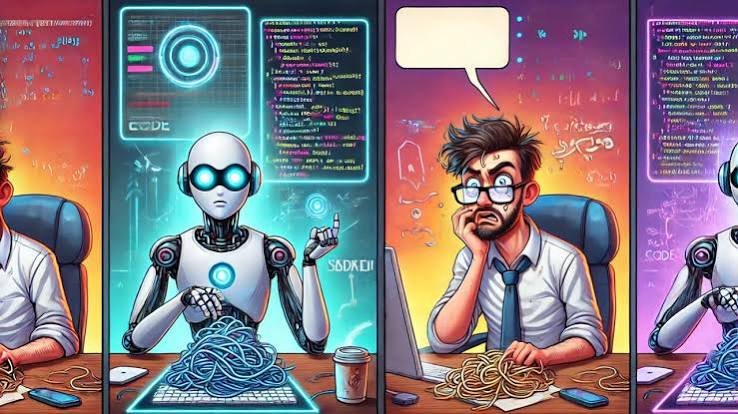
The biggest risk posed by AI coding assistants is that they enable developers to write more code much faster than previously possible and the combination of speed and volume can overwhelm the code review process. CodeRabbit’s 2025 report found that AI-coauthored PRs contained roughly 1.7x as many issues as their human-only counterparts, and that industry coverage suggests widespread “under-review of AI output” that creates “verification debt” and security liabilities for software teams. The title of the longitudinal study on the topic says it all: “AI Writes Faster Than Humans Can Review.” That trend poses serious risks for software teams that are using AI coding assistants to generate code faster than their engineers can review it with sufficient care and diligence.
This trend isn’t universal, however telemetry from 84 enterprise organizations and 14,200+ full-time developers across an extended 12-month period uncovered benchmark trends for Git and pull request activity within that ecosystem. Those trends indicated that typical implementations saw a 32% faster lead time for changes while also seeing 50% more defects and 42% slower code review process. At the same time, organizations with higher levels of maturity were able to see most of the benefits while limiting many of the drawbacks in particular, high-performing teams saw a 45% faster lead time for changes with only a 23.5% increase in defects and a 9.3% improvement in code review speed.
In short, most of the risks associated with AI coding assistants are contextual and depend heavily on how the tools are used. Teams that fail to adopt new processes and review practices around the use of these tools are much more likely to see negative outcomes, but those same organizations can avoid most pitfalls by adjusting the way they approach code review.
Interestingly enough, the same trends indicate that using AI coding assistants for actual code review has a fundamentally positive impact on the outcome. According to the 2025 State of AI Code Quality from Qodo, 81% of teams using AI tools specifically for code review purposes report quality improvements.
Junior Developers vs Senior Developers
Not all developers are using AI coding assistants the same way in fact, juniors and seniors have fundamentally different needs and leverage AI tools in different ways. Juniors tend to use them for auto-complete and explanations while seniors tend to use them for generation and scaffolding. That pattern makes intuitive sensejuniors are more likely to use AI assistants to learn and understand while seniors use them to accelerate repetitive, tedious tasks so they can spend more time on challenging work.
The same survey indicates that juniors and seniors tend to have different perspectives on AI assistants. Learners report slightly lower levels of positive sentiment than professionals (53% versus 61%) , but that appears to be because juniors are much more likely to be aware of both the opportunities and the risks presented by these tools.
There is a parallel concern around the impact of these tools on entry-level jobs according to the 2025 State of Developers survey from Uvik Software, 61% of juniors report that the job market is challenging, compared to only 34% of seniors. That could be a sign that the industry is beginning to see the impact of tools like GitHub Copilot and others that are accelerating the rate at which developers can write code, potentially eliminating entry-level roles.
Real-World Impact: How Major Tech Companies Are Leveraging AI Coding Assistants
Many organizations at the cutting edge of software development have publicly reported on their use of AI coding assistants. Google, for example, has seen 75% of its new code being AI-generated and approved by engineers up from just over a quarter of new code being AI-generated in October 2024. That represents an extraordinary acceleration in the adoption of these tools at one of the world’s largest software companies.
There is also healthy competition between the various AI coding assistant providers. Developer awareness of Claude Code increased dramatically from 31% in April-June 2025 to 57% in January 2026, and the tool scored a 91% satisfaction rating with the highest net promoter score from JetBrains among similar tools. That kind of rapid rise in mindshare and positive perception will have major implications for the competition between these tools, especially given that the broader developer audience has been openly skeptical about the value and impact of AI coding assistants in general.
Limitations of AI Code Review
AI code review tools have value, but they have limitations and most experienced developers are aware of those shortcomings.
AI models are good at finding patterns and often excellent at finding bugs and other common issues, but they are fundamentally weaker when it comes to intent in other words, most AI code review tools are very good at finding problems that could be found by scanning the code in much the same way that a human reviewer would scan it, but they are much less likely to identify genuinely novel weaknesses that require additional insight and investigation. This has been demonstrated in multiple contexts, including in a 2025 paper on AI-assisted programming published on arxiv that warned that AI-assisted programming may decrease the productivity of experienced developers by increasing the maintenance burden. That warning is rooted in reality many AI-generated code samples contain enough complexity and subtlety that they actually introduce new maintenance challenges, requiring additional review and analysis.
Security researchers have looked at the limitations of AI code review from a different angle, specifically at the dangers posed by “widespread under-review of AI output.” That trend, identified in the 2025 CodeRabbit report, means that many organizations are adopting AI coding assistants without updating their code review practices, creating serious security liabilities for the industry as a whole.
A Look Ahead: The Future of AI-Assisted Code Review
The trends identified in recent studies suggest that the future of code review will see many organizations continuing to adopt AI coding assistants while also evolving their review and development processes around those tools. Agents are playing an increasingly prominent role in code review, with 13.1% of professional developers using AI agents as of the 2025 DEV Community survey.
Those agents are frequently used as autonomous code assistants capable of testing and iterating on a code review process rather than simply providing suggestions. The most common application of agents in code review is to accelerate first-pass review, and the evidence suggests that that approach can have extremely positive results for code quality.
The best future for code review involves a fundamental reorganization of the division of labor between human reviewers and AI tools. Humans will be able to dedicate more of their time and effort to genuinely challenging problems and spend less time on first-pass, pattern-based code review that can be automated. The data on high-performing teams demonstrates that that future is available to all organizations that are willing to embrace it.
Conclusion
AI coding assistants have fundamentally changed the way that code review works for the better, accelerating the process while also improving quality in many cases. Code review has become much faster, more efficient, and more effective, but it has also become much more distributed, with many first-pass responsibilities being delegated to AI assistants that are capable of handling simple tasks like identifying and explaining basic issues in the code. The data indicates that teams that embrace those changes can see substantial improvements in their code review process, but the same data also shows that many organizations are aware of the risks posed by these tools and are using them cautiously and deliberately. The same tools can be used to accelerate development while also creating significant liabilities for the organizations that adopt them, and the most successful approaches to code review will balance the opportunities while mitigating the risks.
